The Mercedes-Benz Museum in Stuttgart, Germany, is a remarkable structure. Designed by Ben van Berkel and Caroline Bos of the Dutch firm UN Studio, the building received rave reviews when it opened in May of 2006.The architects needed a bit of magic to bring the museum’s open plan into compliance with fire codes. Like in the Guggenheim, the interior is one continuously unfolding space that spirals around a central atrium.

As a consequence there could be no fire doors to contain smoke if a blaze broke out in one section of the building. To solve the problem, UN Studio hired the engineering firm Imtech to design a system that would draw smoke away from all areas of the museum, allowing people to escape.The result is the world’s largest man-made air vortex, a 112-foot-high tornado that automatically activates in the event of a fire, drawing smoke into the center of the atrium and moving it upward through an axial fan in the ceiling. An array of 144 outlets in the surrounding walls emit powerful jets of air to generate a central region of low pressure, just like in a real tornado. Imtech engineers perfected the design using computational fluid dynamic simulations and laboratory models. The firm has created similar systems for airports in several German cities, including Düsseldorf and Hamburg.
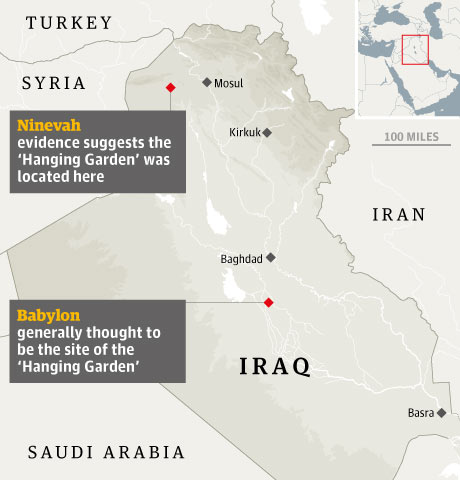


The whereabouts of one of the seven wonders of the ancient world – the fabled Hanging Garden of Babylon – has been one of the great mysteries from antiquity. The inability of archaeologists to find traces of it among Babylon's ancient remains led some even to doubt its existence.

Now a British academic has amassed a wealth of textual evidence to show that the garden was instead created at Nineveh, 300 miles from Babylon, in the early 7th century BC.After 18 years of study, Stephanie Dalley of Oxford University has concluded that the garden was built by the Assyrians in the north of Mesopotamia – in modern Iraq – rather than by their great enemies the Babylonians in the south.She believes her research shows that the feat of engineering and artistry was achieved by the Assyrian king, Sennacherib, rather than the Babylonian king, Nebuchadnezzar.

The evidence presented by Dalley, an expert in ancient Middle Eastern languages, emerged from deciphering Babylonian and Assyrian cuneiform scripts and reinterpreting later Greek and Roman texts. They included a 7th-century BC Assyrian inscription that, she discovered, had been mistranslated in the 1920s, reducing passages to "absolute nonsense".

She was astonished to find Sennacherib's own description of an "unrivaled palace" and a "wonder for all peoples". He describes the marvel of a water-raising screw made using a new method of casting bronze – and predating the invention of Archimedes' screw by some four centuries. Dalley said this was part of a complex system of canals, dams and aqueducts to bring mountain water from streams 50 miles away to the citadel of Nineveh and the hanging garden. The script records water being drawn up "all day".

Recent excavations have found traces of aqueducts. One near Nineveh was so vast that Dalley said its remains looked like a stretch of motorway from the air, and it bore a crucial inscription: "Sennacherib king of the world … Over a great distance I had a watercourse directed to the environs of Nineveh …"

Having first broached her theory in 1992, Dalley is now presenting a mass of evidence in a book, The Mystery of the Hanging Garden of Babylon, which Oxford University Press publishes on 23 May. She expects to divide academic opinion, but the evidence convinces her that Sennacherib's garden fulfills the criteria for a wonder of the world – "magnificent in conception, spectacular in engineering, and brilliant in artistry".

The seven wonders appear in classical texts written centuries after the garden was created, but the 1st-century historian Josephus was the only author to name Nebuchadnezzar as creator of the Hanging Garden, Dalley said. She found extensive confusion over names and places in ancient texts, including the Book of Judith, muddling the two kings.
HERE IS  ANOTHER WONDER.....
               

The Centennial Light is the world's longest-lasting light bulb. It is at 4550 East Avenue, Livermore, California, and maintained by the Livermore-Pleasanton Fire Department.The fire department says that the bulb is at least 110 years old and has been turned off only a handful of times. Due to its longevity, the bulb has been noted by The Guinness Book of World Records, Ripley's Believe It or Not!, and General Electric. It is often cited as evidence for the existence of planned obsolescence in later-produced light bulbs.

The bulb was officially listed in the Guinness Book of World Records as "the Most Durable Light", in 1972, replacing another bulb in Fort Worth, Texas. The bulb was listed in the book for the next 16 editions. It was not listed during 1988–2006, without a reason being given, before returning in 2007.According to the fire chief, every few months a news outlet will publish a story on the bulb, generating visitors and general interest, then it will drop back into obscurity for a while. Dozens of magazines and newspapers have featured articles on the bulb.
Scientists have discovered some words that had been used for centuries.The University of  Waikato's Department of General and Applied Linguistics at the Faculty of Arts and Social Sciences, was part of a team led by Mark Pagel, an evolutionary theorist at the University of Reading in England, which has come up with a list of words which can be traced to old forms around the time of the last Ice Age."This research is completely new and unbelievable says a crew member.

 The researchers looked at cognates across several language families, including Indo-European; Dravidian (from southern India); Altaic (which includes Turkish, Uzbek and Mongolian); Uralic (which includes Finnish and Hungarian); Kartvelian (east European, Baltic area); Chukchi-Kamchatkan (from the far northeastern part of Siberia) and Inuit-Yupik (from the Arctic).The results showed that a 'proto-language' existed which, over time, evolved into the different language families, giving rise to many individual languages spreading all over the continent.Finally,The list of Twenty Three words are.....

  • Thou
  • I
  • not
  • that
  • we
  • to give
  • who
  • this
  • what
  • man/male
  • ye
  • old
  • mother
  • to hear
  • hand
  • fire 
  • to pull 
  • black
  • to flow
  • bark 
  • ashes 
  • to spit
  • worm.
An aurora is a natural light display in the sky particularly in the high latitude (Arctic and Antarctic) regions, caused by the collision of energetic charged particles with atoms in the high altitude atmosphere.
The charged particles originate in the magnetosphere and solar wind and, on Earth, are directed by the Earth's magnetic field into the atmosphere.
File:Aurora Borealis.jpg
                Most aurora occur in a band known as the auroral zone,which is typically 3° to 6° in latitudinal extent and at all local times or longitudes. The auroral zone is typically 10° to 20° from the magnetic pole defined by the axis of the Earth's magnetic dipole. During ageomagnetic storm, the auroral zone expands to lower latitudes. Aurorae are classified as diffuse or discrete. The diffuse aurora is a featureless glow in the sky that may not be visible to the naked eye, even on a dark night. It defines the extent of the auroral zone. The discrete aurorae are sharply defined features within the diffuse aurora that vary in brightness from just barely visible to the naked eye, to bright enough to read a newspaper by at night. Discrete aurorae are usually seen only in the night sky, because they are not as bright as the sunlit sky. Aurorae occasionally occur poleward of the auroral zone as diffuse patches or arcs (polar cap arcs), which are generally invisible to the naked eye.


Watch the Nature's wonder


Chinese scientists have created the world’s lightest substance -- a material so insubstantial it can perch on the petals of a delicate flower without crushing them. A cubic centimeter of the record-setting stuff, carbon aerogel, has a mass of only 0.16 milligram, according to a new study by scientists at Zhejiang University. That’s 12 percent lighter than an equal volume of the previous record-holder, a substance known as aerographite.Having trouble getting a handle just how light this new stuff really is? If the average human body were made entirely of carbon aerogel instead of flesh and bone, it would weigh only 1/40th of a pound!

Lightweight substances can have some pretty heavy-duty applications, and that certainly seems to be the case here. Carbon aerogel can absorb up to 900 times its weight in liquid, which means it has massive potential as a cleaning material when it comes to events such as oil spills. Also durable and highly elastic, it may become a useful material for advanced electronics, study co-author Dr. Chao Gao, a professor of polymer science and engineering at the university, told the Huffington.

Just what does it take to make carbon aerogel?

Dr. Gao's team started with a semi-solid gel of carbon nanotubes and graphene and then used a freeze-drying process to convert it to a solid. Unlike earlier-generation ultralight materials, this new substance is "quite easy to make," according to Gao.
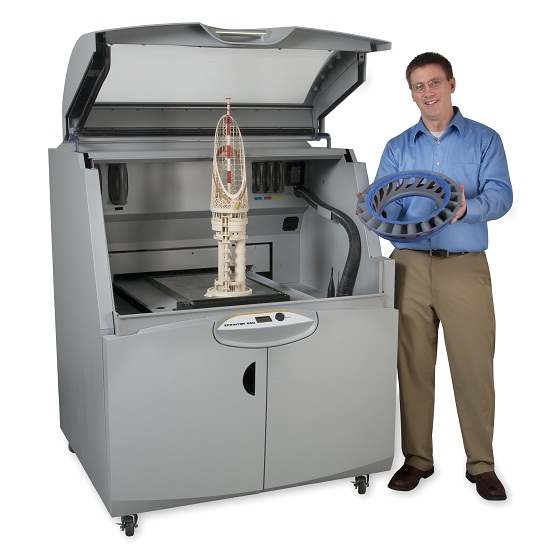
3-D printing is a process of making a three-dimensional solid object of virtually any shape from a digital model. 3D printing is achieved using an additive process, where successive layers of material are laid down in different shapes. 3D printing is considered distinct from traditional machining techniques, which mostly rely on the removal of material by methods such as cutting or drilling.A materials printer usually performs 3D printing processes using digital technology. Since the start of the twenty-first century there has been a large growth in the sales of these machines, and their price has dropped substantially.

The technology is used for both prototyping and distributed manufacturing in jewelry, footwear, industrial design, architecture, engineering and construction , automotive, aerospace, dental and medical industries, education, geographic information systems, civil engineering, and many other fields.Future applications for 3D printing might include creating open-source scientific equipment or other science-based applications like reconstructing fossils in paleontology, replicating ancient and priceless artifacts in archaeology, reconstructing bones and body parts in forensic pathology, and reconstructing heavily damaged evidence acquired from crime scene investigations. The technology is even being explored for building construction.

In 2005, academic journals had begun to report on the possible artistic applications of 3D printing technology.By 2007 the mass media followed with an article in the Wall Street Journal and Time Magazine, listing a 3D printed design among their 100 most influential designs of the year. During the 2011 London Design Festival, an installation, curated by Murray Moss and focused on 3D Printing, was held in the Victoria and Albert Museum (the V&A). The installation was called Industrial Revolution 2.0: How the Material World will Newly Materialise.As of 2012, 3D printing technology has been studied by biotechnology firms and academia for possible use in tissue engineering applications in which organs and body parts are built using inkjet techniques. In this process, layers of living cells are deposited onto a gel medium or sugar matrix and slowly built up to form three-dimensional structures including vascular systems.Several terms have been used to refer to this field of research: organ printing, bio-printing, body part printing,and computer-aided tissue engineering, among others.3D printing can produce a personalized hip replacement in one pass, with the ball permanently inside the socket and is available in printing resolutions that don't require polishing.

The use of 3D scanning technologies allows the replication of real objects without the use of moulding techniques that in many cases can be more expensive, more difficult, or too invasive to be performed, particularly for precious or delicate cultural heritage artifacts where direct contact with the molding substances could harm the original object's surface. Objects as ubiquitous as smartphones can be used as 3D scanners: Sculpteo unveiled a mobile app at the 2012 Consumer Electronics Show that allows a 3D file to be generated directly via smartphone.

Here is another wonder of science watch the red hot ice.......

ITS ALL BY 'INDUCTION' NO MAGIC.......


1. The word “book”
Liber is the Latin word for book, which comes from the Romans, who used the thin layer found between the bark and the wood (the liber) before parchment came along. The English word for book is derived from the Danish word “bog,” which means birch tree. That makes sense because early writers in Denmark wrote on birch bark.

2. How much is that book?
If you think today’s book prices are retarded, consider this: An original copy of Chaucer's Canterbury Tales sold for a record 7.4 million (in US dollars) at Christies in London in 1998. The book was printed in 1477 though, so unless you plan on living another 500 or so years, you’re not likely to see a royalty from that kind of sale.

3. Diving Through the Looking Glass and Into the Pocketbook
Children’s fiction seems to age well. A rare first edition of Alice's Adventures in Wonderland sold for 1.5 million at auction in New York. This makes it the most valuable children's book ever sold. It was Carroll's own working copy, so that probably contributed to the inflated price. There are only 22 copies of the 1865 first edition known to exist today, and only five made it to some private owner’s hot little hands. So we know that there are at least five people in the world with more money than brains.

4. When digital looks real good.
The Buddhist Bible was originally engraved on 729 white marble tablets. These tablets are regarded by Myanmar Buddhists as orthodox texts. The tablets are kept in a square, each protected by its own temple. Each marble tablet is about 3 inches wide and 4 inches long. Try to carry that around in your bag.

5. Bigass Library
The Library of Congress (Washington DC) contains 28 million books and has more than 500 miles of shelving. It would take you eight hours to pass every single book, if you were driving in a car at 70 mph. I’d hate to be the one in charge of dusting.

6. Everyone loves a good mystery.
Who’s the bestselling commercial fiction author of all time? Not Meyer. Not Rowling. Not even King. No, the bestselling author of all time is Agatha Christie. Since 1920 her books have sold over a billion copies in the English language, and another billion in more than 45 other languages. She is outsold only by the Bible and William Shakespeare.

7. But are they good?
We like to toss around the term “prolific” when a writer publishes more than say, two books a year. Honey, you don’t know prolific. Between 1986 and 1996, Brazilian author Jose Carlos Ryoki de Alpoim Inoue published 1,058 novels in the western, science fiction and thriller genres. But are they any good?

8. Poe is creepier than you think.
Edgar Allan Poe wrote about death and all other things dark and macabre. His life itself is a pretty dark story. But his themes and his life are not the most creepy details about Mr. Poe. He wrote a short story in 1838, titled "The Narrative of Arthur Gordon Pym of Nantucket." In the story, three shipwreck survivors in an open boat kill and eat the fourth man, named Richard Parker. In 1884, (almost 50 years LATER) three real-life shipwreck survivors in an open boat killed and ate the fourth man, whose name was also Richard Parker..

9. Stop bitching about royalties.
You think it’s tough to make ends meet as a writer today? Consider that William Shakespeare's average annual income as a playwright was under 32 dollars (USD), which works out to about 13 dollars per play. He made about twice as much from writing plays as Ben Jonson.

10. And also, about Shakespeare
Shakespeare makes Lear, whose character was an early Anglo-Saxon King, mention spectacles. In Macbeth, who dies in 1054, and when writing of King John's reign in 1200, Shakespeare mentions cannons. In Julius Caesar, he has a clock striking three. What’s wrong with these things? Spectacles, cannons and clocks were not invented until the fourteenth century, long after the times in which he set these tales.
Highest Team Total in an inning in IPL: In the 32nd game of IPL 2010, Chennai Super King broke its own record and posted the highest score in the history of IPL, which is still the best. On April 3 at MA Chidambaram Stadium in Chennai, the host team scored 246 runs for the loss of five wickets against Rajasthan Royals. CSK opener Murali Vijay scored 127 runs in just 56 balls with 8 fours and 11 sixes. Albie Morkel played an inning of 62 runs in 34 balls. Out of CSK’s 246 runs, 178 runs came from boundaries. Chennai Super Kings, the winner of the IPL 2010, won that match by 23 runs. Chennai Super King’s earlier best was 240 against Punjab in Mohali in IPL 2008.

Lowest Team Total in an inning in IPL: In the second game of the IPL 2009, played at Newlands, Cape Town in South Africa, the defending champion Rajasthan Royals scored only 58 runs, which is the lowest ever team total in an inning in IPL. Rajasthan Royals was chasing the target of 134 against Royal Challengers Bangalore and the whole team were all out for 58 runs in 15.1 overs. Only three Rajasthan Royals batsmen scored in double figures and three left the crease without any score. Best partnership for the Rajasthan Royals was of 19 runs between Yusuf Pathan and Ravindra Jadeja. Second lowest team total in IPL is 67, scored by Kolkata Knight Riders against Mumbai Indians in 2008.


Highest run getters in IPL matches: Chennai Super King’s batsman Suresh Raina is the leading run getter in the IPL. In the 62 inning of all the four IPL seasons, Suresh Raina has scored 1813 runs with an average of 35. His highest individual score is 98 runs. After Suresh Raina, Mumbai Indians’ captain Sachin Tendulkar is the highest run getter in the IPL. He scored 1723 runs in 51 innings of the tournament with an average of 40. He came up with his maiden century against the Kochi Tuskers Kerala in the IPL 2011. Former Deccan Chargers captain and now Kings XI Punjab captain Adam Gilchrist is the third leading run getters in the IPL. In 60 IPL innings, Gilchrist scored 1603 runs with an average of 27. He is the only batsmen in IPL who has scored more than one hundred.

Maximum wicket takers in IPL matches: RP Singh, who played IPL for two different teams- Deccan Chargers and Kochi Tuskers Kerala, and in IPL 2012, will play for Mumbai Indians, is the highest wicket taker in all IPL matches. In his 56 IPL matches, RP Singh has claimed 64 wickets. In the 2009 edition of the IPL, where his team Deccan Chargers lifted the trophy in South Africa, claimed 23 wickets. After RP Singh, his IPL 2012 teammate Mumbai Indians’ Lasith Malinga is second in the list of leading wicket taker. His tally is 62 wickets in just 42 matches. Amit Mishra, who is now playing for Deccan Chargers and earlier played for Delhi Daredevils, has also picked 62 wickets from 45 matches.

Maximum individual runs in an inning in IPL: In the inaugural game of IPL on April 18, 2008 at M Chinnaswamy Stadium in Bangalore, Kolkata Knight Riders' opener Brendon McCullum scored unbeaten 158 runs in 73 balls against Royal Challengers Bangalore. He reached the 100 runs mark in 53 balls. In his inning, Brendon McCullum got 118 runs through fours and sixes. Murali Vijay, who scored in 56 balls 127 runs against Rajasthan Royals at MA Chidambaram Stadium in Chennai on April 3, 2010, is the second highest individual run in an inning in the IPL. In his inning, Murali Vijay scored 98 runs through boundaries. Paul Valthaty of Kings XI Punjab, who scored unbeaten 120 runs against CSK at Mohali, is the third highest individual run in an inning in IPL.

Best bowling figure in an inning in IPL: In the first edition of IPL in 2008, on May 4 at Sawai Mansingh Stadium in Jaipur, Rajasthan Royals’ left-arm medium pacer Sohail Tanvir claimed six wickets of Chennai Super Kings just for 14 runs, is the still ever best bowling figure in an inning in IPL. He claimed the wickets of the openers at zero runs in the first over of the game. In the second edition of the IPL, Anil Kumble of Royal Challengers Bangalore picked five wickets for Rajasthan Royals for just five runs in 3.1 overs in Cape Town. Due to his magic figures, Rajasthan Royals scored only 58 runs, which is the ever-lowest team total in an inning in IPL.

Fastest century by a batsman in IPL: Fastest century by a batsman in IPL is on the name of former Rajasthan Royals and now Kolkata Knight Riders’ batsman Yusuf Pathan. He scored his century against Mumbai Indians in just 37 deliveries in IPL 2010 at Brabourne Stadium in Mumbai for Rajasthan Royals. In his 100, Yusuf Pathan scored 84 runs through boundaries including eight sixes. The second fastest 100 in the IPL was scored by Adam Glichrist who scored his first IPL century in 2008 as a Deccan Chargers batsman against Mumbai Indians. In his 109 (not out) runs inning, Adam Glichrist reached the 100 runs mark in 42 balls with nine fours and nine sixes.

Most sixes in all by batsman in IPL: Former Deccan Chargers’ batsman under whose leadership the team won the crown of the IPL in 2009 in South Africa and now Kings XI Punjab captain, Adam Gilchrist is the top in the list of most sixes in all by batsman in IPL. In 60 IPL innings, Gilchrist hits 82 sixes and scored two hundred. In this list, Suresh Raina of Chennai Super Kings is on the second position with 78 sixes. Former Rajasthan Royals batsman and Kolkata Knight Riders’ batsman Yusuf Pathan is on the third place in this list with 74 sixes. Former Kolkata Knight Riders’ batsman and now Royal Challengers Bangalore batsman Chris Gayle crossed the ball 70 times over the rope in IPL matches.

Maximum dismissals by a wicketkeeper in IPL: In the Indian Premier League former Deccan Chargers’ captain and now Kings XI Punjab captain, Adam Gilchrist has dismissed 50 batsmen as a wicket keeper in its four sessions. Kumar Sangakkara, who changed from Kings XI Punjab to Deccan Chargers, is the second leading wicket keeper. He dismissed 42 batsmen in IPL from 2008 to 2011. Dinesh Karthik, who was earlier in Delhi Daredevils and now in Kings XI Punjab, has 37 dismissed from his gloves from 2008 to 2011 season of IPL.