Mankind always has, and always will, fight wars. And in order to fight said wars, man needed weapons. Using whatever skills and resources they had, man built tools that would slash, smash, pierce and tear their enemies. Every nation had weapons that made their armies unique. Today when we talk about ancient weapons we immediately think swords, spears, bows and axes. But I find interest in weapons that strike me as out of the norm. This list is an assortment of weapons that have designs, backgrounds or usages that I find rather out of the ordinary. If you feel like anything is excluded or missing from the list, remember there exists a comment section for you to do with as you will!

# 10 Mere Club

Maori-Greenstone-Mere-Carving-P
Used by the Māori tribes of New Zealand, this simple-looking, yet solid, club was built from nephrite jade. Strangely enough, the Māori used the 12-20 inch club for jabbing and thrusting instead of swinging downward blows in the way that most other clubs are used. To the Māori, the mere was a very spiritual weapon. They named their mere clubs and passed them down through generations. They even believed that the clubs contained a mana (spiritual force) of their own. The Māori revered their mere clubs greatly. They were a symbol of leadership, and if any mere that was considered important by a tribe was misplaced, great efforts were taken by the tribe to make sure the mere was located and returned to its respective owner.

# 9 Hook Swords

Hook%20Sword%20W511

Perhaps the most well-known on this list, the Chinese hook swords were wielded by the normally passive Shoalin monks of northern China. Beautifully and artistically designed, the blades were curved into a hook shape at the end which allowed the user to connect the blades by the tip and wield them as a single, long-ranged weapon. The crescent shaped guards were excellent at blocking blows as well as slashing enemies who got too close. The ends of the hilts were sharpened into daggers for stabbing at close range. These swords measured from 4-6 feet from the top of the hook to the end of the sharpened hilt. The blades saw most of their usage from civilians, as the Chinese military did not use them in any of their armies.

# 8 Kpinga

Kpinga


The kpinga was a throwing knife that was used by experienced warriors of the Azande tribe. The Zande people were residents of Nubia, a region in Africa composed of northern Sudan and southern Egypt. The knife (also known by its nickname, the Hunga Munga) was up to 22 inches long and had three blades that extended from the center. The blade closest to the handle is in the shape of a man’s genitals, and represented the masculine power of its owner. The alignment of the blades on the kpinga drastically increased the chances of impaling a target on contact. When the owner of the weapon was married, he presented the kpinga as a gift to the family of his wife.

# 7 Macuahuitl

Macuahuitl


The macuahuitl was basically a large, sword-shaped piece of wood, with razor-sharp pieces of obsidian embedded in the sides. Since the macuahuitl lacked a sharp point, it couldn’t be used as a stabbing weapon; however the jagged rows of obsidian gave the weapon a vicious tearing power that could cut deep lacerations in the enemy. The wood itself is heavy and strong enough to clobber opponents, thus enabling the Aztec to capture the foe alive to be used in their famous ritual sacrifices. There have been accounts of maquahuitls being able to decapitate horses, which is impressive, for a horse’s head is a good deal thicker than that of an adult human being.

# 6 Scissor

Fighter 6


This rather odd-looking weapon was used in the arenas by the gladiators of the ancient Roman Empire. Interestingly enough, the gladiators who wielded the scissor in combat were also known as scissors. The metal casing at the bottom formed a long tube that covered the gladiator’s arm, allowing the weapon to easily block and parry, as well as counterattack. Made from hardened steel, the scissor measured up to one and a half feet long. It is surprisingly light, weighing in at an easy 5-7 pounds; this allowed the scissor to be wielded with a good amount of speed. The scissor’s unique shape and design made it a crowd favorite.


# 5 Chakram

Chakram


Don’t be fooled, the chakram is not something you would want to play frisbee with. Unlike the frisbee, the chakram was often thrown vertically rather than horizontally. The deadly circle of metal was up to a foot in diameter. It’s extremely sharp edge ensured that the chakram could slice off arms and legs with ease. This weapon originated from India, where it was used extensively by the high ranking Indian Sikhs. Much like a distant relative, the shrunken, the chakram could be stacked one on the other and thrown repeatedly. One interesting throwing method used by professional warriors was to spin the chakram on their index finger, and then, with a sharp flick of the wrist, launch the whirring blade at their opponent.


# 4 Chu Ko Nu

2E7451D24F25Aee7A79B82638225E286.Image


Another Chinese weapon, the chu ko nu was basically an ancestor to the automatic rifle – it sacrificed range and power for a quick reload time. The wooden case on the top of the crossbow held 10 crossbow bolts which fell into place when the rectangular lever on the back was pulled back after firing a bolt. One interesting fact is that the chu ko nu last saw its use in the Sino-Japanese wars of 1894-1895, years after the rise of firearms. The crossbow could fire on average a total of 10 bolts within 15 seconds. Which, when compared to the reload speed of normal bows and crossbows, is a great improvement. For added effectiveness, some of the bolts were tipped with poison from the deadly aconite flower, also known as wolfsbane.


# 3 Nest of Bees

Swarmofbees2


Now I have to hand it to the Chinese, their weapons have made four entries on my list. Third place is taken by the nest of bees, or flying fire. Basically it was a wooden container filled with tubes in the shape of a hexagon, which, when viewed from the front, gave the weapon the appearance of a large honeycomb. Inside each of the tubes was a rocket propelled arrow. The rockets launched the arrows with more power and range than that of a traditional bow. Up to 32 arrows could be launched from a nest at once. The Chinese would fire thousands of bees’ nests at once, killing plenty of enemies within seconds.


# 2 Katar

Wea032-1-


This Indian weapon gave its owner the claws of wolverine, minus the strength and cutting power of adamantium. The katar at first glance has a single blade, however when a trigger on the h-shaped handle was activated, the blade would split into three, one on the middle and one on each side. The three blades not only made the weapon more effective at stabbing and slashing, but they also intimidated and/or startled the opponent. The blade’s positioning on the handle also allowed it to easily block attacks. Its unusual design has yet another purpose – the triple blades could easily stab through all kinds of Asian armor with ease.

# 1 Zhua

Zhua

One look at this incredibly odd-looking device was more than enough to convince me that it deserved the number one place on this list. Yet another Chinese weapon, the zhua’s conspicuous iron “hand” at the end had sharp claw-like nails that would impale flesh, and then tear it off from the body. The sheer weight of the zhua was enough to kill the opponent, but the claws made it even deadlier. When wielded by a professional, it could be used to pull mounted soldiers off their horse. But the main use of the zhua was to pull off the shields of enemies, leaving them exposed to the clawed hand of iron.


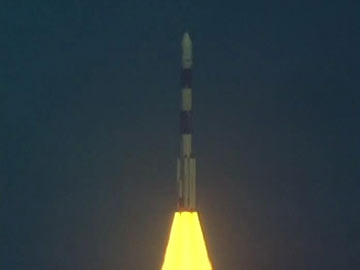
Courtesy : ISRO
Fossils are often stored in plaster casts, or jackets, to protect them from damage. Getting information about a fossil typically requires the removal of the plaster and all the sediment surrounding it, which can lead to loss of material or even destruction of the fossil itself.German researchers studied the feasibility of using CT and 3-D printers to nondestructively separate fossilized bone from its surrounding sediment matrix and produce a 3-D print of the fossilized bone itself.

\"The most important benefit of this method is that it is non-destructive, and the risk of harming the fossil is minimal," said study author Ahi Sema Issever, M.D., from the Department of Radiology at Charité Campus Mitte in Berlin. "Also, it is not as time-consuming as conventional preparation."

Dr. Issever and colleagues applied the method to an unidentified fossil from the Museum für Naturkunde, a major natural history museum in Berlin. The fossil and others like it were buried under rubble in the basement of the museum after a World War II bombing raid. Since then, museum staff members have had difficulty sorting and identifying some of the plaster jackets.Researchers performed CT on the unidentified fossil with a 320-slice multi-detector system. The different attenuation, or absorption of radiation, through the bone compared with the surrounding matrix enabled clear depiction of a fossilized vertebral body.

After studying the CT scan and comparing it to old excavation drawings, the researchers were able to trace the fossil's origin to the Halberstadt excavation, a major dig from 1910 to 1927 in a clay pit south of Halberstadt, Germany. In addition, the CT study provided valuable information about the condition and integrity of the fossil, showing multiple fractures and destruction of the front rim of the vertebral body.Furthermore, the CT dataset helped the researchers build an accurate reconstruction of the fossil with selective laser sintering, a technology that uses a high-powered laser to fuse together materials to make a 3-D object.

Dr. Issever noted that the findings come at a time when advances in technology and cheaper availability of 3-D printers are making them more common as a tool for research. Digital models of the objects can be transferred rapidly among researchers, and endless numbers of exact copies may be produced and distributed, greatly advancing scientific exchange, Dr. Issever said. The technology also potentially enables a global interchange of unique fossils with museums, schools and other settings.

"The digital dataset and, ultimately, reproductions of the 3-D print may easily be shared, and other research facilities could thus gain valuable informational access to rare fossils, which otherwise would have been restricted," Dr. Issever said. "Just like Gutenberg's printing press opened the world of books to the public, digital datasets and 3-D prints of fossils may now be distributed more broadly, while protecting the original intact fossil."
ndia launched its first mission to Mars this afternoon from the Sriharikota spaceport in Andhra Pradesh, beginning a 300-day journey to study the Martian atmosphere.

Mangalyaan, which means "Mars craft" in Hindi, is the size of a small car and is scheduled to begin orbiting Mars by September, searching for methane and signs of minerals.

India blasts off in race to Mars with ISRO's low-cost 'Mangalyaan' missionThe satellite is golden in colour and is being carried by a rocket much smaller than American or Russian equivalents.

Lacking the power to fly directly, the 350-tonne launch vehicle will orbit Earth for nearly a month, building up the necessary velocity to break free from our planet's gravitational pull.

Only then will it begin the second stage of its nine-month journey which will test India's scientists to the full, five years after they sent a probe called Chandrayaan to the moon.

The total cost of the project is 450 crores, one sixth of the cost of a Mars probe set to be launched by NASA in 13 days.

Only the United States, Europe, and Russia have sent probes that have orbited or landed on Mars. Probes to Mars have a high failure rate. A similar mission by China failed to leave Earth's orbit in 2011.

"This is a technology demonstration project, a mission that will announce to the world India has the capability to reach as far away as Mars, "said K. Radhakrishnan, chairman of the Indian Space and Research Organization

Source: ndtv.com

Computer Sketch At its glory...


Illustrations of Indian Gods

2013 Nobel Laureates


Physiology or Medicine:
James E. Rothman, Randy W. Schekman and Thomas C. Südhof

Physics:
François Englert and Peter Higgs
Chemistry:
Martin Karplus, Michael Levitt and Arieh Warshel

Literature:
Alice Munro

Peace:
 Organization for the Prohibition of Chemical Weapons 

Economic Sciences:
Eugene F. Fama, Lars Peter Hansen, Robert J. Shiller
Sachin Tendulkar started off with centuries in his debut matches in the Ranji, Duleep and Irani Trophy. No other domestic cricketer has been able to break this record till now.

Sachin Tendulkar was done in by a sharp bouncer from Zimbabwe’s Henry Olonga in a league match at Sharjah in 1998. In the final match against the same opposition, Tendulkar had his revenge as he smashed the bowler all around the ground and belted an unbeaten 118 runs.


Sachin Tendulkar is a big fan of tennis legend John McEnroe. In his formative years, McEnroe was Tendulkar’s idol. The young Sachin pleaded his parents to get a similar headband and wristbands like McEnroe. Also take one look at his childhood snaps and the McEnroe styled shock of hair on his head tells everything.

Sachin Tendulkar was named after the great musician SD Burman. Sachin’s father’s, Ramesh Tendulkar was a big fan of SD’s music.

 Sachin Tendulkar was led onto the field on his Ranji debut by his then captain, Ravi Shastri.

Sachin Tendulkar was gifted a Ferrari 360 Modena by F1 champion Michael Schumacher in 2002. Ferrari presented the car to Sachin in honour of him equalling Don Bradman’s record of 29 Test centuries.

Sachin Tendulkar spoke to his favourite music star, Mark Knopfler, the lead guitarist of the rock band, Dire Straits for the very first time during a programme he was doing for the ESPN network. It was Sachin’s birthday and it turned out to be a happy surprise for him.

Sachin Tendulkar went to watch the movie Roja in 1995 with a beard and disguise. And it all went wrong when his glasses fell off and the crowd in the cinema hall recognised him.

 Sachin Tendulkar returned from a four-month tour of Australia after the 1992 World Cup and immediately turned up to represent Kirti College in April 1992. That’s some commitment from a cricketer who was already a superstar by then.

 Sachin Tendulkar uses a very heavy bat at the crease, weighing 3.2lbs. Only South Africa's Lance Klusener used a heavier bat in world cricket.

Sachin Tendulkar wanted to become a fast bowler, but when he was rejected by Dennis Lillee’s MRF Pace Foundation in 1987. Lillee told the young Tendulkar to focus on his batting. The other youngster turned away by Lillee along with Tendulkar was Sourav Ganguly.

Sachin Tendulkar fielded for Pakistan as a substitute during a one-day practice match against India at the Brabourne Stadium in 1988.

Sachin Tendulkar and Vinod Kambli set a world record partnership of 664 runs in the Harris Shield, an inter-school tournament in Mumbai. Tendulkar scored an unbeaten 326 runs and reportedly the mammoth stand literally drove the opposition to tears.

Sachin Tendulkar at the age of 19 became the youngest Indian to play in county cricket.

Sachin Tendulkar had to wait for 79 matches for his first ODI century and by that time he had scored seven Test hundreds.

Sachin Tendulkar was the first batsman to be given out by the Third-umpire. In 1992, on the second day of the Durban Test, a Jonty Rhodes throw caught Tendulkar short of the crease. After watching TV replays he was adjudged out.

7. Sachin Tendulkar made his Test debut in 1989 against Pakistan in Karachi. In the same match, Pakistani pacer Waqar Younis also played his first Test match ever.

Sachin Tendulkar went to Sharadashram Vidyamandir School only after coach Ramakant Achrekar saw his batting potential. Achrekar was the cricket coach of Sharadashram Vidyamandir School. Before enrolling at Shardashram, Tendulkar went to New England School of Indian Education Society in East Bandra

The first brand which Sachin Tendulkar endorsed was the health drink ‘Boost.’ He was seen alongside Kapil Dev in many of their ad films, the start of which happened in 1990.

English fast bowler Allan Mulally playing in his debut Test against India complained that Sachin Tendulkar was batting with a bat broader than the normal willow. That’s how much Tendulkar had psyched the bowler with his brilliant batting.

Sachin Tendulkar was without a bat contract until the start of the 1996 Cricket World Cup. At the end of the tournament a famous tyre manufacturer sponsored his willow.

Sachin Tendulkar was a big bully in the school. Whenever his friend introduced him to a new kid in the school, Tendulkar would invariably ask, “Will I be able to beat him?’ He was famous for picking up a fight.

Sachin Tendulkar asked his friend to dip the tennis ball in a bucket of water and hurl at him so that he could find out whether he was hitting ball from the middle of his bat.

Sachin Tendulkar has been granted the Rajiv Gandhi Khel Ratna, Arjuna Award and Padma Shri by Indian government. He is the only Indian cricketer to get all of them.

Sachin Tendulkar played for Yorkshire what was so special about it? Well, he was the county side’s first overseas professional ever. He averaged 46.52 with the bat in his stint with the county team.

Sachin Tendulkar's wife Anjali does not eat or drink whenever the Master is at the crease.

Sachin Tendulkar was most fascinated by band-aids. A hint of a wound and he would plaster it all over the injury.

Sachin Tendulkar loves collecting perfumes and watches.

Sachin Tendulkar batted in his debut Test against Pakistan wearing the pads gifted to him by Sunil Gavaskar

In 1992 Sachin became the youngest cricketer to reach a 1000 runs in Test cricket

Ashley Giles was the first bowler to get him stumped out in Test cricket in 2002

Sachin’s record of five test centuries before he turned 20 is a current world record.

Tendulkar is the only player who has 40 wkts and more than 11000 runs in Tests

Sachin Tendulkar has the most number of Stadium Appearances: 90 different Grounds

35. Sachin Tendulkar with Sourav Ganguly hold the world record for the maximum number of runs scored by the opening partnership. They have put together 6,271 runs in 128 matches.

36. He has 20 century partnerships for opening pair with Sourav Ganguly is a world record.

37. Tendulkar has scored most Centuries in a calendar year: 9 ODI centuries in 1998.

38. In 1998 he made 1,894 ODI runs, a record for ODI runs by any batsman in a calendar year.
In 2011, when an MIT senior named John Romanishin proposed a new design for modular robots to his robotics professor, Daniela Rus, she said, "That can't be done."Two years later, Rus showed her colleague Hod Lipson, a robotics researcher at Cornell University, a video of prototype robots, based on Romanishin's design, in action. "That can't be done," Lipson said.

In November, Romanishin -- now a research scientist in MIT's Computer Science and Artificial Intelligence Laboratory (CSAIL) -- Rus, and postdoc Kyle Gilpin will establish once and for all that it can be done, when they present a paper describing their new robots at the IEEE/RSJ International Conference on Intelligent Robots and Systems.

Known as M-Blocks, the robots are cubes with no external moving parts. Nonetheless, they're able to climb over and around one another, leap through the air, roll across the ground, and even move while suspended upside down from metallic surfaces.Inside each M-Block is a flywheel that can reach speeds of 20,000 revolutions per minute; when the flywheel is braked, it imparts its angular momentum to the cube. On each edge of an M-Block, and on every face, are cleverly arranged permanent magnets that allow any two cubes to attach to each other.


"It's one of these things that the [modular-robotics] community has been trying to do for a long time," says Rus, a professor of electrical engineering and computer science and director of CSAIL. "We just needed a creative insight and somebody who was passionate enough to keep coming at it -- despite being discouraged."

Embodied abstraction
As Rus explains, researchers studying reconfigurable robots have long used an abstraction called the sliding-cube model. In this model, if two cubes are face to face, one of them can slide up the side of the other and, without changing orientation, slide across its top.The sliding-cube model simplifies the development of self-assembly algorithms, but the robots that implement them tend to be much more complex devices. Rus' group, for instance, previously developed a modular robot called the Molecule, which consisted of two cubes connected by an angled bar and had 18 separate motors. "We were quite proud of it at the time," Rus says.

According to Gilpin, existing modular-robot systems are also "statically stable," meaning that "you can pause the motion at any point, and they'll stay where they are." What enabled the MIT researchers to drastically simplify their robots' design was giving up on the principle of static stability.

"There's a point in time when the cube is essentially flying through the air," Gilpin says. "And you are depending on the magnets to bring it into alignment when it lands. That's something that's totally unique to this system."
That's also what made Rus skeptical about Romanishin's initial proposal. "I asked him build a prototype," Rus says. "Then I said, 'OK, maybe I was wrong.'"

Sticking the landing

To compensate for its static instability, the researchers' robot relies on some ingenious engineering. On each edge of a cube are two cylindrical magnets, mounted like rolling pins. When two cubes approach each other, the magnets naturally rotate, so that north poles align with south, and vice versa. Any face of any cube can thus attach to any face of any other.
The cubes' edges are also beveled, so when two cubes are face to face, there's a slight gap between their magnets. When one cube begins to flip on top of another, the bevels, and thus the magnets, touch. The connection between the cubes becomes much stronger, anchoring the pivot. On each face of a cube are four more pairs of smaller magnets, arranged symmetrically, which help snap a moving cube into place when it lands on top of another.

As with any modular-robot system, the hope is that the modules can be miniaturized: the ultimate aim of most such research is hordes of swarming microbots that can self-assemble, like the "liquid steel" androids in the movie "Terminator II." And the simplicity of the cubes' design makes miniaturization promising.

But the researchers believe that a more refined version of their system could prove useful even at something like its current scale. Armies of mobile cubes could temporarily repair bridges or buildings during emergencies, or raise and reconfigure scaffolding for building projects. They could assemble into different types of furniture or heavy equipment as needed. And they could swarm into environments hostile or inaccessible to humans, diagnose problems, and reorganize themselves to provide solutions.


Strength in diversity


The researchers also imagine that among the mobile cubes could be special-purpose cubes, containing cameras, or lights, or battery packs, or other equipment, which the mobile cubes could transport. "In the vast majority of other modular systems, an individual module cannot move on its own," Gilpin says. "If you drop one of these along the way, or something goes wrong, it can rejoin the group, no problem."

"It's one of those things that you kick yourself for not thinking of," Cornell's Lipson says. "It's a low-tech solution to a problem that people have been trying to solve with extraordinarily high-tech approaches."

"What they did that was very interesting is they showed several modes of locomotion," Lipson adds. "Not just one cube flipping around, but multiple cubes working together, multiple cubes moving other cubes -- a lot of other modes of motion that really open the door to many, many applications, much beyond what people usually consider when they talk about self-assembly. They rarely think about parts dragging other parts -- this kind of cooperative group behavior."

In ongoing work, the MIT researchers are building an army of 100 cubes, each of which can move in any direction, and designing algorithms to guide them. "We want hundreds of cubes, scattered randomly across the floor, to be able to identify each other, coalesce, and autonomously transform into a chair, or a ladder, or a desk, on demand," Romanishin says.
An international research team, led by researcher at the University of Electro-Communication observed an infrared dark cloud G34.43+00.24 MM3 with ALMA and discovered a baby star surrounded by a large hot cloud. This hot cloud is about ten times larger than those found around typical solar-mass baby stars.

Hot molecular clouds around new-born stars are called "Hot Cores" and have temperature of -- 160 degrees Celsius, 100 degrees hotter than normal molecular clouds. The large size of the hot core discovered by ALMA shows that much more energy is emitted from the central baby star than typical solar-mass young stars. This may be due to the higher mass infall rate, or multiplicity of the central baby star. This result indicates a large diversity in the star formation process.

The research findings are presented in the article "ALMA Observations of the IRDC Clump G34.43+00.24 MM3: Hot Core and Molecular Outflows," published in the Astrophysical Journal, Vol. 775, of September 20, 2013.

A large hot molecular cloud around a very young star was discovered by ALMA. This hot cloud is about ten times larger than those found around typical solar-mass baby stars, which indicates that the star formation process has more diversity than ever thought. This result was published in the Astrophysical Journal on September 20th, 2013.

Stars are formed in very cold (-260 degrees Celsius) gas and dust clouds. Infrared Dark Clouds (IRDC) are dense regions of such clouds, and thought that in which clusters of stars are formed. Since most of stars are born as members of star clusters, investigating IRDCs has a crucial role in comprehensive understanding the star formation process.

A baby star is surrounded by the natal gas and dust cloud, and the cloud is warmed up from its center. Temperature of the central part of some, but not all, of such clouds reaches as high as -160 degrees Celsius. Astronomers call those clouds as "hot core" -- it may not be hot on Earth, but is hot enough for a cosmic cloud. Inside hot cores, various molecules, originally trapped in the ice mantle around dust particles, are sublimated. Organic molecules such as methanol (CH3OH), ethyl cyanide (CH3CH2CN), and methyl formate (HCOOCH3) are abundant in hot cores.

International research team, led by Takeshi Sakai at the University of Electro-Communication, Japan, used ALMA to observe an IRDC named G34.43+00.24 MM3 (hereafter MM3) in the constellation Aquila (the Eagle). They discovered a young object from which the methanol molecular line is strongly emitted. A detailed investigation tells them that the temperature of the methanol gas is -140 degrees Celsius. This shows that MM3 harbors a baby star surrounded by a hot core. The size of the hot core is as large as 800 times 300 astronomical units (au, 1 au equals to the mean distance of the Sun and Earth; 150 million km). Typical size of hot cores around low-mass young stars is several tens to hundred of au, therefore the hot core in MM3 is exceptionally large. Sakai says "Thanks to the high sensitivity and spatial resolution, we need only a few hours to discover a previously unknown baby star. This is an important step to understand the star formation process in a cluster forming region."

The team also observed radio emission from carbon sulfide (CS) and silicon monoxide (SiO) to reveal the detailed structure of the molecular outflow from the baby star. The speed of the emanated gas is 28 km/s and the extent is 4,400 au. Based on these values, the team calculates the age of the outflow of only 740 years. Although molecular outflows are common features around protostars, the outflow as young as the one in MM3 is quite rare. In summary, ALMA finds that the protostar in MM3 is very young but has a giant hot core.

Why the hot core in MM3 is so large? In order to warm up the large volume of gas, the baby star should emit much more energy than typical ones. Protostars produce emission by converting the gravitational energy of infalling material to the thermal energy. The large size of the hot core in MM3 is possibly due to the high mass infalling rate than ever thought. The other possibility is that two or more protostars are embedded in the hot core. The research team has not reached the reason with this observation yet. "ALMA's spatial resolution improves much more in the near future," Sakai says, "Then much detail of the infalling material toward the protostar can be revealed, and it helps us answer to the mystery behind the diversity in star formation."
In a completely unexpected finding, MIT researchers have discovered that tiny water droplets that form on a superhydrophobic surface, and then "jump" away from that surface, carry an electric charge. The finding could lead to more efficient power plants and a new way of drawing power from the atmosphere, they say.
The finding is reported in a paper in the journal Nature Communications written by MIT postdoc Nenad Miljkovic, mechanical engineering professor Evelyn Wang, and two others.

Miljkovic says this was an extension of previous work by the MIT team. That work showed that under certain conditions, rather than simply sliding down and separating from a surface due to gravity, droplets can actually leap away from it. This occurs when droplets of water condense onto a metal surface with a specific kind of superhydrophobic coating and at least two of the droplets coalesce: They can then spontaneously jump from the surface, as a result of a release of excess surface energy.

In the new work, "We found that when these droplets jump, through analysis of high-speed video, we saw that they repel one another midflight," Miljkovic says. "Previous studies have shown no such effect. When we first saw that, we were intrigued."

In order to understand the reason for the repulsion between jumping droplets after they leave the surface, the researchers performed a series of experiments using a charged electrode. Sure enough, when the electrode had a positive charge, droplets were repelled by it as well as by each other; when it had a negative charge, the droplets were drawn toward it. This established that the effect was caused by a net positive electrical charge forming on the droplets as they jumped away from the surface.

The charging process takes place because as droplets form on a surface, Miljkovic says, they naturally form an electric double layer -- a layer of paired positive and negative charges -- on their surfaces. When neighboring drops coalesce, which leads to their jumping from the surface, that process happens "so fast that the charge separates," he says. "It leaves a bit of charge on the droplet, and the rest on the surface."

The initial finding that droplets could jump from a condenser surface -- a component at the heart of most of the world's electricity-generating power plants -- provided a mechanism for enhancing the efficiency of heat transfer on those condensers, and thus improving power plants' overall efficiency. The new finding now provides a way of enhancing that efficiency even more: By applying the appropriate charge to a nearby metal plate, jumping droplets can be pulled away from the surface, reducing the likelihood of their being pushed back onto the condenser either by gravity or by the drag created by the flow of the surrounding vapor toward the surface, Miljkovic says

."Now we can use an external electric field to mitigate" any tendency of the droplets to return to the condenser, "and enhance the heat transfer," he says.

But the finding also suggests another possible new application, Miljkovic says: By placing two parallel metal plates out in the open, with "one surface that has droplets jumping, and another that collects them … you could generate some power" just from condensation from the ambient air. All that would be needed is a way of keeping the condenser surface cool, such as water from a nearby lake or river. "You just need a cold surface in a moist environment," he says. "We're working on demonstrating this concept."

The research team also included graduate student Daniel Preston and Ryan Enright, who was a postdoc at MIT and the University of Limerick and is now at Bell Labs Ireland, part of Alcatel-Lucent. The work received funding from the U.S. Department of Energy through the MIT Solid-State Solar-Thermal Energy Conversion Center, the Office of Naval Research and the National Science Foundation.