An international team of researchers has announced the discovery of the world’s oldest known fossil primate skeleton representing a previously unknown genus and species named Archicebus achilles.

The fossil was unearthed from an ancient lake bed in central China’s Hubei Province, near the course of the modern Yangtze River. In addition to being the oldest known example of an early primate skeleton, the new fossil is crucial for illuminating a pivotal event in primate and human evolution—the evolutionary divergence between the lineage leading to modern monkeys, apes and humans (collectively known as anthropoids) on the one hand and that leading to living tarsiers on the other. The scientific paper describing the discovery appears today in the prestigious journal Nature.

The fossil was recovered from sedimentary rock strata that were deposited in an ancient lake roughly 55 million years ago, during the early part of the Eocene epoch. This was an interval of global “greenhouse” conditions, when much of the world was shrouded in tropical rainforests and palm trees grew as far north as Alaska. Like most other fossils recovered from ancient lake strata, the skeleton of Archicebus was found by splitting apart the thin layers of rock containing the fossil. As a result, the skeleton of Archicebus is now preserved in two complementary pieces called a “part” and a “counterpart,” each of which contain elements of the actual skeleton as well as impressions of bones from the other side.

The skeleton of Archicebus is about 7 million years older than the oldest fossil primate skeletons known previously, which include Darwinius from Messel in Germany and Notharctus from the Bridger Basin in Wyoming. Furthermore, Archicebus belongs to an entirely separate branch of the primate evolutionary tree that lies much closer to the lineage leading to modern monkeys, apes and humans. Darwinius and Notharctus, on the other hand, are adapiform primates that are early relatives of living lemurs, the most distant branch of the primate family tree with respect to humans and other anthropoids.

Statistical analyses aimed at reconstructing how much an adult Archicebus would have weighed in life show that it was slightly smaller than the smallest living primates, which are pygmy mouse lemurs from Madagascar. Archicebus would have weighed about 20-30 grams (~ 1 ounce).Dr. Marian Dagosto notes that, “Even though Archicebus appears to be a very basal member of the tarsier lineage, it resembles early anthropoids in several features, including its small eyes and monkey-like feet. It suggests that the common ancestor of tarsiers and anthropoids was in some ways more similar than most scientists have thought.”

The new fossil takes its name from the Greek arche (meaning beginning or first; the same root as archaeology) and the Latin cebus (meaning long-tailed monkey). The species name achilles (derived from the mythological Greek warrior Achilles) highlights the new fossil’s unusual heel bone.
For the first time, scientists have mapped the structure of a metallic glass on the atomic scale, bringing them closer to understanding where the liquid ends and the solid begins in glassy materials. The findings could help explain the mystery of why glasses, or disordered solids form.

At the liquid-glass transition, the melt doesn't become solid at a distinct point, but becomes gradually more viscous until it is rigid. When crystalline solids - such as graphite, salt and diamonds - form they become abruptly rigid as the atoms form a regular, periodic arrangement. Glass never develops into an ordered atomic arrangement,but seems to retain the disordered structure of the liquid, despite its solidity.

This disordered structure gives glasses unique properties. Metallic glasses have a higher strength-to-weight ratio than aluminium and titanium alloys and are extremely promising structural materials with unique applications as biomaterials and microelectromechanical systems.

Led by Dr Amelia Liu from Monash University's School of Physics and the Monash Centre for Electron Microscopy, the researchers found that the structure of this Zr-based glass was not random, but composed in large part by efficiently arranged 13-atom icosohedral clusters. cosahedra have 20 faces, 12 vertices and 12 axes of five-fold symmetry, which means they cannot be packed into an ordered three dimensional, crystalline structure.

“It has long been theorised that icosahedra were a key atomic motif in the structure of metallic glasses and could, in fact, underlie glass formation. We have provided the first experimental confirmation of this,” Dr Liu said.“Our findings also point the way towards understanding the glass transition from liquid to solid – a grand challenge in modern condensed matter physics.”

The researchers - from Monash, the University of Melbourne, the Australian Synchrotron, Ames Laboratory and Iowa State University in the US – developed a new electron scattering technique. By analysing the diffraction patterns from nano-scale volumes in the glass, they were able to identify symmetries in individual atomic clusters in the Zr-glass. Previous techniques had not provided sufficient detail to do this.Dr Liu said that the new technique can now be used to understand the structure of other glasses and help progress the study of disordered materials.
Scientists will retrace Sir Douglas Mawson's 1911-1914 expedition to Antarctica in November, the University of New South Wales  announced Tuesday.A team of 46 researchers and would-be explorers will set out from Hobart, the capital of Australia's southern Tasmania island state, for a six-week journey to repeat measurements made by Mawson's team 100 years ago, including observations of the ocean, wildlife, weather, geology and ice cover.

"Antarctica remains one of the last, great unexplored regions on Earth. It is a unique place to monitor the health of our planet. We want to discover just how much has changed since Mawson's time, " said Chris Turney, professor at the UNSW Climate Change Research Center. The 1.5 million AU dollars (1.46 million U.S. dollars) privately-funded expedition also aims to recapture and share the excitement of scientific exploration and discovery, using the latest technologies to communicate with school children and the public back home in Australia.

The researchers will take measurements of the ocean water, visit sub-Antarctic islands where they will collect sediment cores from lakes and peat bogs, and study the wildlife.They will also drill ice cores and take geological samples to study the changing shape of the ice sheet. A drone will survey from the air and some adventurous scientists hope to venture under the ice.


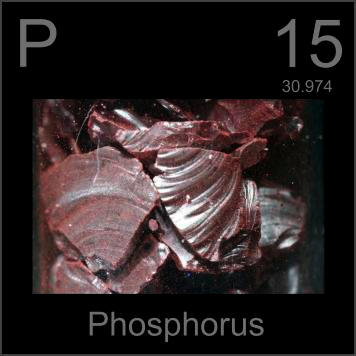
Phosphorus is a precious element, with all life depending on it. It is an essential nutrient for plant growth and an important constituent of fertilizer used in agriculture.Phosphorus is often removed during waste water treatment because it can lead to algal blooms in waterways. It is traditionally removed from waste water streams using chemical or biological processes before the water is discharged to the environment.

Waste water streams typically contain low concentrations of phosphorus, making direct recovery of phosphorus both technically and economically challenging. However, a team from CSIRO has developed a technique that can recover phosphorus from these low concentrations to provide a valuable resource.The conventional biological treatment process known as enhanced biological phosphorus removal removes phosphorus from waste water by selectively enriching a group of bacteria known as polyphosphate accumulating organisms.

CSIRO’s novel approach, termed enhanced biological phosphorus removal and recovery, exploits this unique characteristic of the organisms to ‘carry’ the phosphorus from the diluted waste water stream over to a concentrated recovery stream.

The phosphorus concentration in the recovery stream was approximately four times that of the concentration in the original waste water.The result was a phosphorus concentration in the recovery stream that was approximately four times that of the phosphorus concentration in the original waste water.The novel approach has applications for waste water treatment utilities and fertilizer producers alike.Further research is underway to increase the phosphorus concentration in the recovery stream.This research is being delivered through the Urban Water Technologies Stream of CSIRO’s Water for a Healthy Country Flagship.
The Mercedes-Benz Museum in Stuttgart, Germany, is a remarkable structure. Designed by Ben van Berkel and Caroline Bos of the Dutch firm UN Studio, the building received rave reviews when it opened in May of 2006.The architects needed a bit of magic to bring the museum’s open plan into compliance with fire codes. Like in the Guggenheim, the interior is one continuously unfolding space that spirals around a central atrium.

As a consequence there could be no fire doors to contain smoke if a blaze broke out in one section of the building. To solve the problem, UN Studio hired the engineering firm Imtech to design a system that would draw smoke away from all areas of the museum, allowing people to escape.The result is the world’s largest man-made air vortex, a 112-foot-high tornado that automatically activates in the event of a fire, drawing smoke into the center of the atrium and moving it upward through an axial fan in the ceiling. An array of 144 outlets in the surrounding walls emit powerful jets of air to generate a central region of low pressure, just like in a real tornado. Imtech engineers perfected the design using computational fluid dynamic simulations and laboratory models. The firm has created similar systems for airports in several German cities, including Düsseldorf and Hamburg.


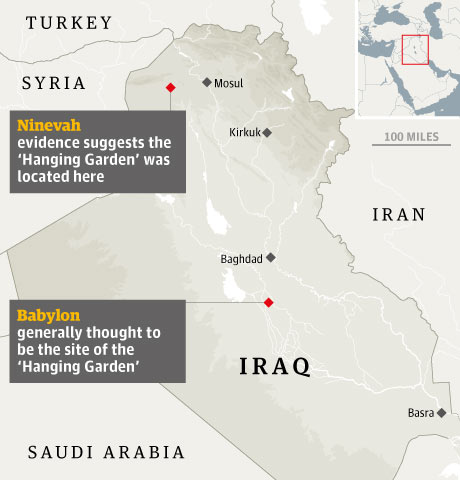
The whereabouts of one of the seven wonders of the ancient world – the fabled Hanging Garden of Babylon – has been one of the great mysteries from antiquity. The inability of archaeologists to find traces of it among Babylon's ancient remains led some even to doubt its existence.

Now a British academic has amassed a wealth of textual evidence to show that the garden was instead created at Nineveh, 300 miles from Babylon, in the early 7th century BC.After 18 years of study, Stephanie Dalley of Oxford University has concluded that the garden was built by the Assyrians in the north of Mesopotamia – in modern Iraq – rather than by their great enemies the Babylonians in the south.She believes her research shows that the feat of engineering and artistry was achieved by the Assyrian king, Sennacherib, rather than the Babylonian king, Nebuchadnezzar.

The evidence presented by Dalley, an expert in ancient Middle Eastern languages, emerged from deciphering Babylonian and Assyrian cuneiform scripts and reinterpreting later Greek and Roman texts. They included a 7th-century BC Assyrian inscription that, she discovered, had been mistranslated in the 1920s, reducing passages to "absolute nonsense".

She was astonished to find Sennacherib's own description of an "unrivaled palace" and a "wonder for all peoples". He describes the marvel of a water-raising screw made using a new method of casting bronze – and predating the invention of Archimedes' screw by some four centuries. Dalley said this was part of a complex system of canals, dams and aqueducts to bring mountain water from streams 50 miles away to the citadel of Nineveh and the hanging garden. The script records water being drawn up "all day".

Recent excavations have found traces of aqueducts. One near Nineveh was so vast that Dalley said its remains looked like a stretch of motorway from the air, and it bore a crucial inscription: "Sennacherib king of the world … Over a great distance I had a watercourse directed to the environs of Nineveh …"

Having first broached her theory in 1992, Dalley is now presenting a mass of evidence in a book, The Mystery of the Hanging Garden of Babylon, which Oxford University Press publishes on 23 May. She expects to divide academic opinion, but the evidence convinces her that Sennacherib's garden fulfills the criteria for a wonder of the world – "magnificent in conception, spectacular in engineering, and brilliant in artistry".

The seven wonders appear in classical texts written centuries after the garden was created, but the 1st-century historian Josephus was the only author to name Nebuchadnezzar as creator of the Hanging Garden, Dalley said. She found extensive confusion over names and places in ancient texts, including the Book of Judith, muddling the two kings.
HERE IS  ANOTHER WONDER.....
               

The Centennial Light is the world's longest-lasting light bulb. It is at 4550 East Avenue, Livermore, California, and maintained by the Livermore-Pleasanton Fire Department.The fire department says that the bulb is at least 110 years old and has been turned off only a handful of times. Due to its longevity, the bulb has been noted by The Guinness Book of World Records, Ripley's Believe It or Not!, and General Electric. It is often cited as evidence for the existence of planned obsolescence in later-produced light bulbs.

The bulb was officially listed in the Guinness Book of World Records as "the Most Durable Light", in 1972, replacing another bulb in Fort Worth, Texas. The bulb was listed in the book for the next 16 editions. It was not listed during 1988–2006, without a reason being given, before returning in 2007.According to the fire chief, every few months a news outlet will publish a story on the bulb, generating visitors and general interest, then it will drop back into obscurity for a while. Dozens of magazines and newspapers have featured articles on the bulb.
Scientists have discovered some words that had been used for centuries.The University of  Waikato's Department of General and Applied Linguistics at the Faculty of Arts and Social Sciences, was part of a team led by Mark Pagel, an evolutionary theorist at the University of Reading in England, which has come up with a list of words which can be traced to old forms around the time of the last Ice Age."This research is completely new and unbelievable says a crew member.

 The researchers looked at cognates across several language families, including Indo-European; Dravidian (from southern India); Altaic (which includes Turkish, Uzbek and Mongolian); Uralic (which includes Finnish and Hungarian); Kartvelian (east European, Baltic area); Chukchi-Kamchatkan (from the far northeastern part of Siberia) and Inuit-Yupik (from the Arctic).The results showed that a 'proto-language' existed which, over time, evolved into the different language families, giving rise to many individual languages spreading all over the continent.Finally,The list of Twenty Three words are.....

  • Thou
  • I
  • not
  • that
  • we
  • to give
  • who
  • this
  • what
  • man/male
  • ye
  • old
  • mother
  • to hear
  • hand
  • fire 
  • to pull 
  • black
  • to flow
  • bark 
  • ashes 
  • to spit
  • worm.
An aurora is a natural light display in the sky particularly in the high latitude (Arctic and Antarctic) regions, caused by the collision of energetic charged particles with atoms in the high altitude atmosphere.
The charged particles originate in the magnetosphere and solar wind and, on Earth, are directed by the Earth's magnetic field into the atmosphere.
File:Aurora Borealis.jpg
                Most aurora occur in a band known as the auroral zone,which is typically 3° to 6° in latitudinal extent and at all local times or longitudes. The auroral zone is typically 10° to 20° from the magnetic pole defined by the axis of the Earth's magnetic dipole. During ageomagnetic storm, the auroral zone expands to lower latitudes. Aurorae are classified as diffuse or discrete. The diffuse aurora is a featureless glow in the sky that may not be visible to the naked eye, even on a dark night. It defines the extent of the auroral zone. The discrete aurorae are sharply defined features within the diffuse aurora that vary in brightness from just barely visible to the naked eye, to bright enough to read a newspaper by at night. Discrete aurorae are usually seen only in the night sky, because they are not as bright as the sunlit sky. Aurorae occasionally occur poleward of the auroral zone as diffuse patches or arcs (polar cap arcs), which are generally invisible to the naked eye.


Watch the Nature's wonder


Chinese scientists have created the world’s lightest substance -- a material so insubstantial it can perch on the petals of a delicate flower without crushing them. A cubic centimeter of the record-setting stuff, carbon aerogel, has a mass of only 0.16 milligram, according to a new study by scientists at Zhejiang University. That’s 12 percent lighter than an equal volume of the previous record-holder, a substance known as aerographite.Having trouble getting a handle just how light this new stuff really is? If the average human body were made entirely of carbon aerogel instead of flesh and bone, it would weigh only 1/40th of a pound!

Lightweight substances can have some pretty heavy-duty applications, and that certainly seems to be the case here. Carbon aerogel can absorb up to 900 times its weight in liquid, which means it has massive potential as a cleaning material when it comes to events such as oil spills. Also durable and highly elastic, it may become a useful material for advanced electronics, study co-author Dr. Chao Gao, a professor of polymer science and engineering at the university, told the Huffington.

Just what does it take to make carbon aerogel?

Dr. Gao's team started with a semi-solid gel of carbon nanotubes and graphene and then used a freeze-drying process to convert it to a solid. Unlike earlier-generation ultralight materials, this new substance is "quite easy to make," according to Gao.